Connected movement
The Kinetic Chain: It All Connects
Human movement is produced by linked joints and muscles sharing force. The foot, ankle, knee, hip, pelvis and spine do not take turns working. They coordinate at the same time.
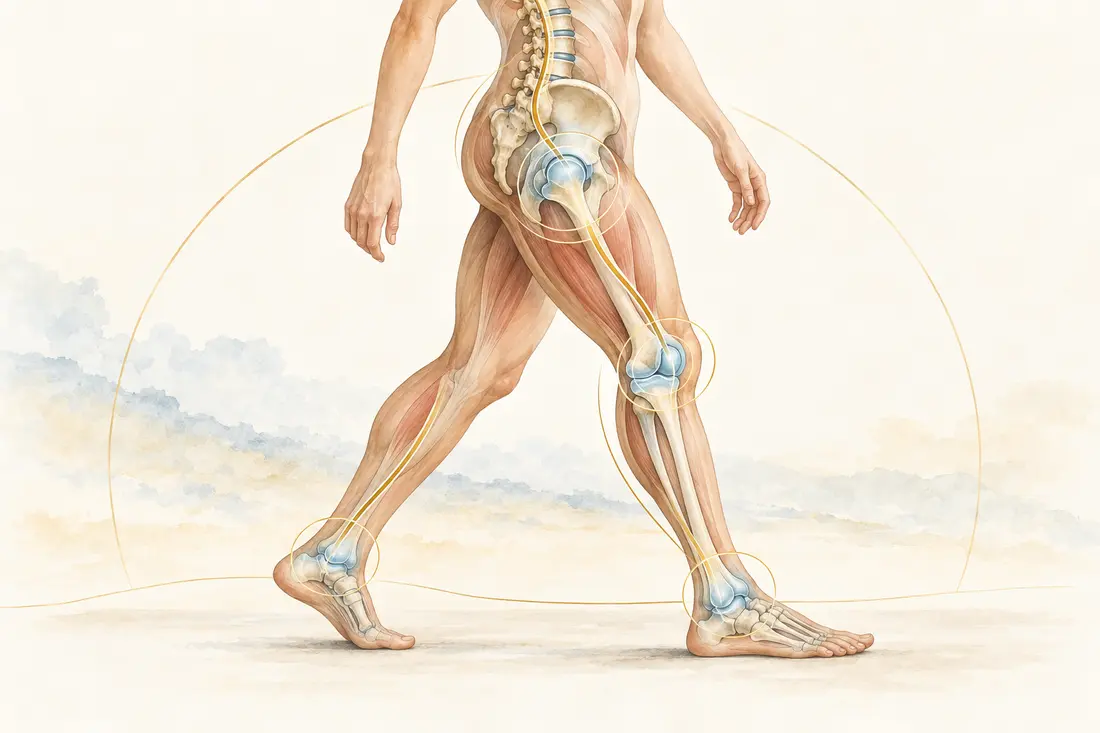
Force moves through the body
When your foot contacts the ground, force travels upward. The foot adapts, the ankle moves, the knee bends, the hip controls the femur and the pelvis and trunk organize the body above. When the body pushes forward, the sequence reverses and energy returns to the ground.
Compensation is useful, until it is not
Compensation allows us to keep moving when one area is stiff, weak, painful or poorly controlled. In the short term this is remarkably useful. Over time, however, the area doing extra work may become irritated.
A stiff ankle may cause extra movement at the knee or foot. Reduced hip control may alter femoral position and knee tracking. Restricted pelvic or spinal motion may change stride and load distribution.
Find the limiting link
An effective assessment follows the chain. It compares the painful area with the joints above and below it, observes the activity that produces symptoms and distinguishes structural findings from movement findings.
Restoring useful movement
Depending on the findings, care may include restoring restricted joint motion, improving muscle control, changing an aggravating activity and gradually rebuilding tolerance. Addressing the relevant links can reduce unnecessary stress on the area that has been carrying the burden.
This article provides general educational information and does not replace an individual clinical examination, diagnosis or treatment recommendation.